Browse topics
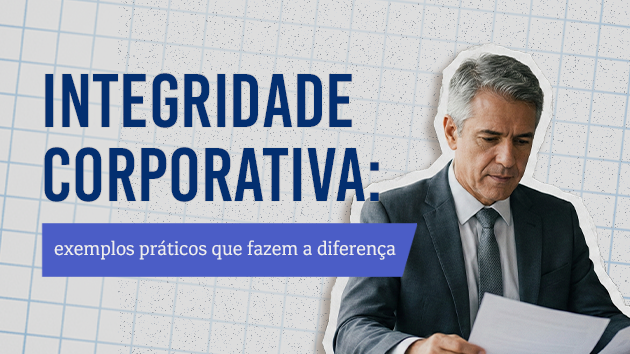
Integrity often appears in corporate presentations as a noble, yet generic value. The problem is that many organizations treat the subject as rhetoric rather than concrete practice. What protects a company's reputation is not just what is in the code of ethics. It is the way leaders and teams make decisions in real situations.
Corporate integrity is the ability to maintain coherence between what an organization stands for and what it does on a daily basis. This includes how it handles conflicts of interest, how it responds to commercial pressures, how it treats people, and how it ensures transparency in internal processes. The concept goes far beyond combating corruption. It encompasses behavioral risks, social influence, decision-making, and the strength of the culture.
To navigate this scenario, this content brings together concrete examples of corporate integrity, shows how ethical decisions shape culture, and explains why moments of pressure expose behavioral risks. It also presents the rationale behind integrity tests, increasingly supported by intelligent analytics and AI-generated data, which help identify decision-making patterns and strengthen a solid ethical culture. At the end, you will find practical ways to turn integrity into daily action within your company.
Why everyday ethical decisions shape organizational culture
Ethical culture is not born from major announcements. It is formed in daily life, through micro-decisions made by leaders, managers, and employees. These are small choices that, when added together, build the perception of what is acceptable or not within the company.
Behavioral science research shows that most breakdowns of integrity do not happen out of bad intentions. They arise from mental shortcuts, social pressures, and misaligned incentives. Therefore, everyday ethical decisions are the barometer of true integrity. With each dilemma, the company reinforces or weakens its culture.
Integrity is made of the cement of small choices. It is the kind of material that only hardens when repeated, every day, until it becomes part of the structure.
Examples of corporate integrity that make a difference
Below are plausible situations showing how integrity manifests in practice. These are simple decisions, but with a direct impact on culture and reputation.
1. Conflict of interest in the purchasing team
Corporate integrity appears more clearly when we look at common situations within a company. These are moments that seem simple, but reveal the consistency between words and practice. How do individual decisions influence the entire culture?
Practical situation
An analyst receives a proposal from a supplier with whom they have a personal relationship.
Involved dilemma
Proceed with the process or step aside to avoid any doubt about the choice.
Decision made
The analyst reports the conflict to the manager and transfers the evaluation to another colleague without any ties.
Impact
The decision preserves the credibility of the process and signals transparency to the entire team.
Solutions such as integrity tests help identify how professionals deal with this type of dilemma before it happens, as they simulate similar scenarios and reveal decision-making patterns.
Pressure to close a contract without complete documentation
Practical situation
A strategic client wants to close quickly, and the sales team is pressuring the legal department to sign without full verification.
Involved dilemma
Accelerate to secure the contract or maintain the compliance flow.
Decision made
The legal department upholds the procedure and proposes secure alternatives to expedite validation.
Impact
Goals are important, but they do not outweigh the commitment to integrity. This type of decision reinforces clear standards of conduct and reduces future vulnerabilities. In integrity assessments, dilemmas involving pressure for results often reveal whether teams preserve principles even in urgent contexts.
3. Workplace bullying in an operational team
Leader behavior sets the standard of respect within the company.
Practical situation
During a meeting, a leader publicly exposes an employee in a humiliating way before the team.
Involved dilemma
Intervene and face the discomfort or ignore to avoid conflict.
Decision made
A coordinator interrupts the situation, talks to the leader in private, and activates the internal channels.
Impact on culture
The intervention shows that respect is practice and not a slogan. It protects the team's well-being and discourages abuses of authority.
Integrity tests can show how leaders tend to act when faced with situations that require moral courage.
Financial reports with inconsistencies
Financial errors may seem small, but they generate significant risks when ignored.
Practical situation
An analyst identifies discrepancies in entries that affect quarterly indicators.
Involved dilemma
Fix and take on the impact or leave it for later to avoid tension with other areas.
Decision made
The analyst documents the inconsistency and informs management.
Impact on culture
The decision prevents risks, improves predictability, and creates a safe environment for reporting failures. In behavioral assessments, dilemmas involving numbers and time pressure usually separate those who maintain integrity from those who resort to shortcuts.
5. Inappropriate use of confidential information
Strategic information requires extra care. Leaks, even involuntary ones, can cause serious damage.
Practical situation
An employee notices that a colleague intends to use internal data for personal gain.
Involved dilemma
Talk directly, report, or ignore.
Decision made
The employee registers the case in the internal channel objectively.
Impact on culture
The attitude reinforces that information is a critical asset of the company. It shows ethical maturity and strengthens trust between departments. In integrity tests, scenarios involving confidentiality help predict how the team reacts when no one is watching.
These examples show that integrity is not revealed only in major crises. It is present in small, repeated, and often silent decisions. When the company understands how people react to real dilemmas, it gains clarity about its risks and the strength of its culture. Structured behavioral assessments, which include ethical simulations, help identify these patterns before they evolve into bigger problems.
How the pressure for results tests integrity
Pressure scenarios are fertile environments for misconduct. Studies show that under the burden of high targets or fear of punishment, people tend to justify decisions they normally wouldn't make. In moments of crisis, cost-cutting, or commercial disputes, integrity becomes much clearer.
That is when decisions about shortcuts, empty promises, omissions, or manipulated reports emerge. It is also when leaders show whether they protect the culture or sacrifice it. Therefore, evaluating team behavior under pressure is a reliable way to measure the strength of corporate integrity.
Integrity test: how to evaluate decisions under pressure
The integrity test is a tool created to measure how employees and leaders react to ethical dilemmas in realistic scenarios. It simulates critical situations involving conflicts of interest, target pressure, people management, and transparency. By evaluating the responses, the company can identify risk patterns, inconsistencies, and development opportunities.
This analysis is not only used to map vulnerabilities. It strengthens culture, aligns expectations, and creates space for difficult conversations that are normally avoided.
Want to find out if your team makes ethical decisions even under pressure? Apply a integrity test and see the result.
How to implement a decision-based integrity culture
A consistent ethical culture does not depend solely on policies. It depends on people who understand the responsibility of the choices they make every day. To strengthen this system, some actions are essential.
- Create spaces for ethical reflection: meetings and workshops that bring real dilemmas help teams train their critical vision.
- Communicate values clearly: values need to be explained with practical examples and clear consequences.
- Developing coherent leaders: leaders need to be role models, as their choices shape behaviors.
- Implement listening and reporting systems: reliable channels encourage the reporting of risks and protect whistleblowers.
- Evaluating decisions with transparency: reviewing critical situations and sharing lessons learned strengthens trust.
Want to find out if your team makes ethical decisions even under pressure?
Run a sanity check and see the result.
Start by evaluating real behaviors. PIR yes S2 Consulting reveal risks, decision patterns e opportunities for strengthening ethical culture. Discover how to implement this process with rigor and security.